
Saturday, November 21, 2009
TV Rebels: Rod Serling - Submitted For Your Approval
So without further adieu, we bring you the eleventh essay of TV Rebels:
Rod Serling: Submitted For Your Approval
by Lou Orfanella
In the early years of television, science fiction, terror, and horror all graced the small screen with various degrees of success. Boris Karloff's Thriller ran for two seasons in the early '60s. Science Fiction Theater was seen in syndication in the mid-1950s. Local stations around the country programmed A and B list horror movies with low budget wrap-arounds and creepy hosts, notably John Zacherley in Philadelphia and later in New York.
When the Rod Serling hosted Twilight Zone premiered on CBS in October of 1959 the science fiction anthology genre reached a new level. The Twilight Zone was a unique combination of terror, suspense, mystery, and irony that raised the sci-fi television bar to a new intellectual level. This likely surprised no one familiar with Serling's work. He was a well respected writer who had success in radio and with scripts for television anthology series like Playhouse 90 for which he wrote "Requiem for a Heavyweight," arguably his most famous piece. The scripts, many written by Serling, were often ironic slices of life and its often dark side and resonated in viewers' minds long after the final credits rolled. "Most of Serling's comrades had long since left television for other less censorious and more 'artistic' media, but Serling refused to abandon video: he believed in television. And-unquestionable-Serling liked the limelight" (Sander xix).
The combination of Serling's skills as a writer coupled with his desire to be in front of the camera is likely what helped The Twilight Zone achieve legendary status. His on camera introductions to each episode, delivered in a dry monotone, became as popular as the teleplays themselves. The content of the stories often shed light on cultural ills and human frailties. In "Escape Clause" a man granted immortality in exchange for his soul decides to challenge the death penalty only to be sentenced to life in prison instead. Aliens arrive on earth "To Serve Man" according to one of their books translated by earthlings, yet it turns out to be a cook book. In yet another of the series' most enduring episodes, "Time Enough at Last" the lone survivor of a nuclear attack believes he will finally achieve his dream of having ample time to read all he wants, only to break his glasses. Serling would return from the shadows at the end of each episode to offer a comment on mankind and society.
The Twilight Zone ran until 1964 with both the title and theme song becoming an indelible part of popular culture. To be "in The Twilight Zone" came to mean in a strange or inexplicable situation, and all one needs to do is vocalize a few notes of the show's spooky theme music to indicate danger on the horizon. Rod Serling, long a proponent of intelligent, literate television never replicated the success he had with The Twilight Zone. He returned as host and frequent writer of Night Gallery on NBC from 1970-1973 but audiences did not embrace it as they had his earlier program. The Twilight Zone was revived in the years after Serling's death (at age fifty in 1975) first on CBS, then in first run syndication and later on the UPN network, but never to the same popularity as the original.
When all is said and done, Rod Serling was The Twilight Zone. "As Stephen King wrote in Danse Macabre, a collection of his meditations on horror that was excerpted in TV Guide in 1982, The Twilight Zone 'generated a kind of existential weirdness that no other series has been able to match'" (Lasswell 150). Eulogized in TV Guide in 1975 Serling was called, "an angry crusader, pleading the cause of quality television...he was a charming man-involved, concerned, restless-and he made a great contribution to television. We are all in his debt" (Harris 231).
Works Cited
Harris, Jay S. TV Guide: The First 25 Years. New York: Simon and Schuster, 1978.
Lasswell, Mark. TV Guide: Fifty Years of Television. New York: Crown, 2002.
Sander, Gordon. Serling: The Rise and Twilight of Television's Last Angry Man. New York: Plume, 1994.


Sitcoms Airing Tonight / Sitcom Stars on Talk Shows
Tuesday, October 6

Tyler Perry's Assisted Living - "The Protector" (BET, 9:00PM ET/PT)
After losing his job, Jeremy decides to move to the backwoods of Georgia to help his grandfather, who has purchased a rundown home for the elderly.
The Ms. Pat Show - "Chili, Chili, Bang, Bang" (BET, 9:30PM ET/PT)
Dark secrets are revealed when Terry's old Army buddy visits and asks for a troubling favor; Janelle gets a little too close to her professor.
Sitcom Stars on Talk Shows (Week of October 5)
Tuesday, October 6
- Kerry Washington (UnPrisoned) - Catch Kerry on Jimmy Kimmel Live! at 11:35pm on ABC.
- Kyle MacLachlan (Carol's Second Act/Sex and the City) - Kyle appears on Jimmy Kimmel Live! at 11:35pm on ABC.
- Caroline Rhea (Sydney to the Max/Sabrina, the Teenage Witch/Pride & Joy) and Tommy Davidson (The Varnell Hill Show/The Proud Family/Malcolm & Eddie/Between Brothers) - Caroline and Tommy will be on a repeat of Funny You Should Ask at 12:37am on CBS.
- Michael Douglas (The Kominsky Method) - ABC's Good Morning America has part two of Diane Sawyer's interview with Michael discussing his new memoir One Helluva Ride sometime between 7-9am. He chats with the ladies of The View on ABC at 11am ET/10am CT-PT. He will also be on ABC News Live Prime with Linsey Davis at 7pm.
- Morris Chestnut (Out All Night) and McKinley Freeman (Samantha Who?) - Morris and McKinley talk about Reasonable Doubt on ABC's GMA 3: What You Need to Know at 1pm.
- Jodie Sweetin (Vampirina: Teenage Vampire/Fuller House/Hollywood Darlings/Full House) and Kenzi Richardson (Vampirina: Teenage Vampire) - Jodie and Kenzi talk about Vampirina: Teenage Vampire on ABC's GMA 3: What You Need to Know at 1pm.
- John Goodman (The Conners/The Righteous Gemstones/Roseanne/Center of the Universe/Normal, Ohio) - John talks about Digger on Live with Kelly and Mark, so check your local listings.
- Bill Burr (F Is for Family/Townies) - Bill stops by for a chat about The Social Reckoning on Live with Kelly and Mark, so check your local listings.
- Scott Caan (Entourage) - Scott and LL Cool J talk about NCIS: New York on CBS Mornings sometime between 7-9am.
- Mikey Madison (Better Things) - Mikey talks about The Social Reckoning on NBC's Today sometime between 7-9am.
- Sam Richardson (The Afterparty/HouseBroken/Detroiters/Veep) - Sam talks about Matchbox the Movie on NBC's Today in the 9am hour.
New on DVD and Blu-ray


01/20/26 - The Woody Woodpecker and Friends Golden Age Collection (Blu-ray)
01/27/26 - The New Fred and Barney Show - The Complete Series (Blu-ray)
02/11/26 - Tom and Jerry - The Complete CinemaScope Collection (Blu-ray)
03/24/26 - Looney Tunes Collector's Vault - Volume 2 (Blu-ray)
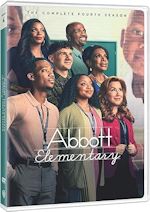
04/11/26 - Abbott Elementary - The Complete Fourth Season (DVD)
04/21/26 - Famous Studios Champion Collection (Blu-ray) (DVD)
05/19/26 - I Love Lucy - The Complete Series - 75th Anniversary Edition (DVD)
05/19/26 - Looney Tunes Cartoons - The Complete Series (Blu-ray) (DVD)
06/16/26 - Difficult People - The Complete Series (Blu-ray)
06/30/26 - Dastardly and Muttley in Their Flying Machines - The Complete Series (Blu-ray)
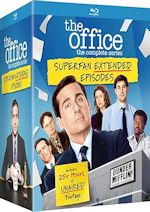
07/14/26 - The Office - The Complete Series - Superfan Extended Episodes (Blu-ray)
07/28/26 - The Bill Dana Show - The Complete Series (DVD)
07/28/26 - I Love Lucy - The Complete Series - 75th Anniversary Edition (Blu-ray)
07/28/26 - The Paper - Season One (Blu-ray) (DVD)
08/25/26 - Perfect Strangers - The Complete Series (Blu-ray) (DVD)
09/08/26 - Looney Tunes Collector's Vault - Volume 3 (Blu-ray)
09/22/26 - Bridget Loves Bernie - The Complete Series (Blu-ray)
10/20/26 - The Quick Draw McGraw Show - The Complete Series (Blu-ray)
More Recent and Upcoming TV DVD and Blu-ray Releases / TV Shows on DVD, Blu-ray and Prime Video / DVD Reviews Archive
Recent SitcomsOnline.com News Blog Posts
 Sitcoms Online Main Page


 Contact Us